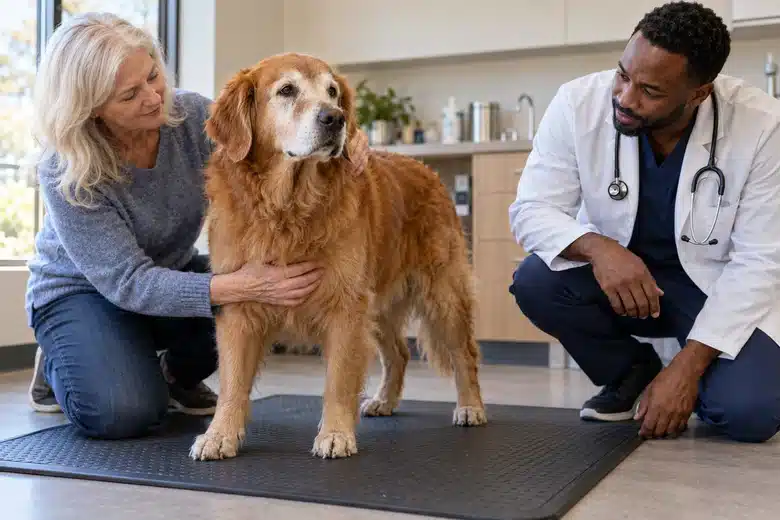
Insurance for Old Dogs
Separate entry-age eligibility from medical-history exclusions and the rules for keeping an existing policy.
What matters on this page
Use these checkpoints to frame the literal question before reading the full guide.
An older dog is not automatically uninsurable, but enrollment eligibility, covered conditions and affordability are separate questions. Read the entry-age rules, the history definition and renewal terms independently. A current posted age statement is not a guarantee that a particular dog can obtain the desired product.
The sections below show how to verify the answer and what can change it.
Begin with the eligibility document, not the birthday label
Ask the insurer which products accept a new application at the dog’s exact age and what date it uses to determine that age. A provider’s general statement about senior pets may not describe every underwriting outcome. Keep the dog’s date of birth or best documented estimate, breed description and state with the response so “eligible” refers to the same animal and product you are considering.
Age-specific verification record
| Age at enrollment | Eligible product | History review | Renewal rule | Evidence date |
|---|---|---|---|---|
| Your dog’s documented age: enter before quoting | Written offer needed for chosen product | Complete prior-clinic records needed | Read the actual continuous-renewal provision | Capture offer date |
| Posted Pets Best dog-plan example; no individual age supplied | Public page states no upper age limit; individual offer unverified | California specimen section 9.A remains relevant | California specimen section 4.A addresses annual renewal | Reviewed October 7, 2026 |
Posted Pets Best dog-plan example; no individual age supplied
The current Pets Best dog-insurance page states that it has no upper age limit. That is an enrollment example, not a market-wide rule or proof that an older dog’s existing conditions will be paid. The state specimen used here is the California IAIC-PBI0001-ILL (02/2023) packet with its California amendment; another state or underwriter needs a separate check.
A record audit is more useful than “healthy for their age”
Ask each prior clinic for the same history packet
Do not edit out an observation or treat a missing diagnosis as a clean bill of health. In the California example, section 9.A is the operative prior-condition review and section 10 supplies definitions. Ask which records control any exclusion and whether it is limited to a named condition. The purpose of organizing the history is an accurate review, not an attempt to avoid disclosure.
Ready to check current rates?
Keep policy terms, deductible, reimbursement and limits beside the quote so the comparison stays consistent.
New enrollment is different from keeping coverage
For a dog that already has insurance, compare the current renewal packet before considering replacement. A renewal rule says how an existing contract continues; it does not prove a new insurer will treat the same history identically. The California specimen’s section 4.A addresses ongoing annual renewal, while section 3.B describes changes that may require a new policy. Locate the equivalent clauses in your own documents before canceling anything.
Clinical age and policy age answer different questions
AAHA explains that senior status varies with species and breed. The veterinarian’s care assessment should not be replaced with an insurance age cutoff. Ask the veterinarian about care needs, and ask the insurer separately about eligibility and exclusions.
Affordability remains an evidence gap
No dated matched official quotes for an older dog were obtained for this guide. Therefore, no older-dog price, price ranking or affordability conclusion is supplied. To complete that step, request the same dog profile and intended benefits from each candidate, keep the time unit and fees visible, and test a single deductible change without altering other selections.
Finish the older-dog decision
Get a written product-eligibility answer for the exact age and state.
Compare prior-history wording with the actual records.
Read renewal and policy-change terms before replacing existing coverage.
Obtain the missing matched quotes and decide whether premium plus retained costs is sustainable.
Keep veterinary care decisions with the treating professional; do not delay necessary evaluation while shopping.
The useful outcome may be a limited shortlist rather than a yes-or-no answer. Preserve any exclusions alongside the quoted benefits, and distinguish the dog’s ongoing known care from the future eligible events the insurance might address. Being accepted for enrollment and receiving payment for a later bill are separate milestones.
Common questions
Does “no upper age limit” mean every illness is covered?
No. It concerns age eligibility. The product offer, medical history, selected benefits and exclusions still need review.
Should I cancel an old policy before checking alternatives?
Compare the replacement offer and its history treatment first. Do not assume that a new policy preserves the protections of continuous existing coverage.
Ready to compare with clearer inputs?
Keep the policy terms beside the price, then continue to rates when the comparison is clear.